

 by hsf-admin
Orderson Decision Summary
In their written ruling of the 8th April 2026 the Court of Appeal set aside the termination of City Council Head of Department of Technology by the Mayor and City Council in February 2016
Court of Appeal.
Wainwright Orderson
Appellant.
V
- Mayor and City Council
- Attorney General.
BEFORE: I’he Honourable Mme. Justice D. Gregory [he Honourable Mr. Justice R. Persaud The Honourable Mr. Justice N. Harnanan
APPEARANCES: Mr. N. Hughes for the Appellant Mr. E. Singh-Lammy for the 1% named Respondent Mr. N. Hawke for the 2** named Respondent
DATES: March 21,2025, April 7, 2025, May 15, 2025, June 18, 2025, July 15, 2025, October 6, 2025, October 28, 2025
Executive Summary.
- Case Background:
- Waynewright Orderson, an employee of the Mayor and City Council of Georgetown, was dismissed on February 4, 2016, for allegedly traveling overseas without authorization between November 30, 2015, and December 11, 2015.
- Orderson claimed he had obtained approval for the trip and that the Mayor supported his account.
- Legal Framework:
- The Local Government Commission, established under the Municipal and District Councils Act, was the body authorized to exercise disciplinary control over employees like Orderson.
- However, the Local Government Commission was not operational at the time of Orderson’s dismissal, raising questions about the authority to discipline him.
- Council’s Actions:
- The Town Clerk and Council terminated Orderson’s employment, supported by a “no objection” letter from the Minister of Communities dated February 1, 2016.
- There was no evidence that the Local Government Commission had delegated its disciplinary authority to the Council, as required by law.
- Doctrine of Necessity:
- The High Court applied the doctrine of necessity, allowing the Council to act in the absence of the Local Government Commission to prevent a failure of justice.
- However, the Court of Appeal questioned whether the Council properly adhered to public law principles, including procedural fairness.
- Procedural Fairness:
- Orderson was summoned to a meeting on January 19, 2016, but claimed he was unaware it was a disciplinary hearing.
- The Court found that the meeting did not meet the standards of procedural fairness, as Orderson was not given adequate notice, a clear opportunity to defend himself, or the ability to present evidence.
- Court of Appeal Decision:
- The Court of Appeal ruled that the dismissal was unlawful due to the lack of procedural fairness and the Council’s lack of authority to discipline Orderson.
- The appeal was allowed, and orders of certiorari were granted to quash the termination decision.
- Costs Awarded:
- The Court awarded costs of $500,000 against the Mayor and City Council and $300,000 against the Attorney General.
- Criticism of Respondents:
- The Town Clerk and Council failed to file submissions or participate in the appeal, despite multiple adjournments granted for this purpose.
In conclusion, the Court of Appeal found that Orderson’s dismissal was procedurally unfair and outside the Council’s jurisdiction, emphasizing the importance of adhering to statutory authority and principles of natural justice.
Dated the 8th day of April 2026.
 by hsf-admin
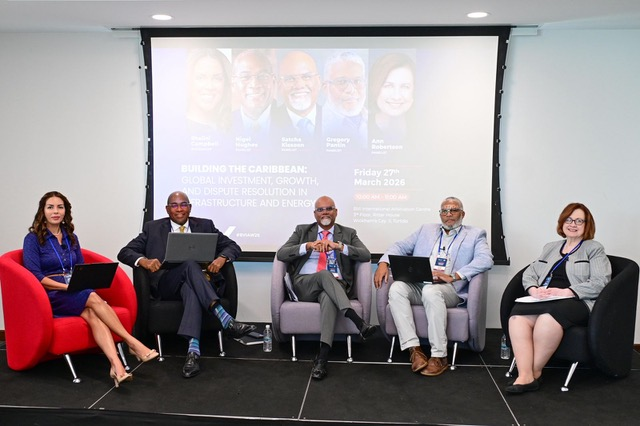
Managing Partner C.A. Nigel Hughes Addresses Global Investment and Dispute Resolution at BVI Arbitration Week
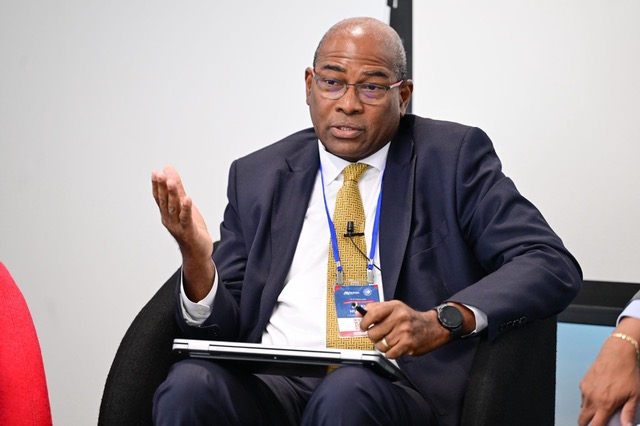
Hughes, Fields & Stoby was pleased to be represented at BVI Arbitration Week, one of the Caribbean’s premier international dispute‑resolution forums, by its Managing Partner, C.A. Nigel Hughes.
During the week‑long programme, which brought together arbitration practitioners, investors, policymakers, and industry leaders from across the globe, Mr. Hughes delivered a presentation focusing on global investment trends in Guyana, the evolving dispute‑resolution landscape, and the implications of rapid economic growth driven by large‑scale infrastructure development.
Guyana’s Growth and Infrastructure Investment
In his presentation, Mr. Hughes highlighted the unprecedented pace of public infrastructure expenditure in Guyana, noting that Government‑led capital projects now amount to hundreds of millions of United States dollars annually. These projects span critical sectors including energy, transportation, public utilities, and industrial development, and are reshaping Guyana’s economic and legal landscape.
He observed that the scale and complexity of these projects have attracted significant foreign participation, resulting in contracts governed by international standards and sophisticated risk‑allocation mechanisms. In many cases, such contracts incorporatedispute‑resolution clauses that designate forums outside the Caribbean, often in North America or Europe.
Dispute Resolution and the Regional Opportunity
Mr. Hughes addressed the implications of this trend for Caribbean jurisdictions, noting that while international arbitration remains an es
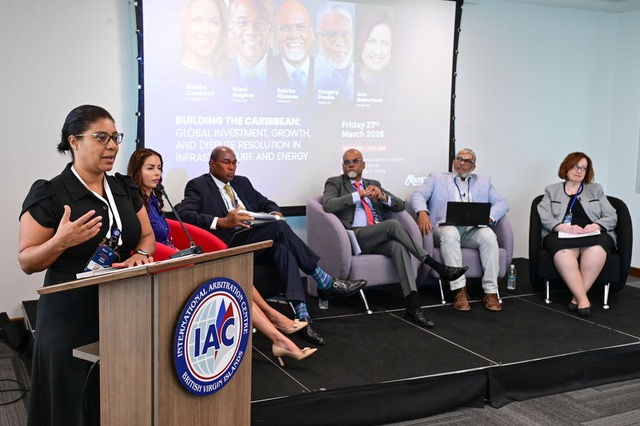
sential tool for managing cross‑border risk, the routine export of disputes from the region raises important questions of access, cost, and regional capacity‑building.
He advocated for the greater use and development of regional arbitration centres, emphasizing that the Caribbean possesses the legal expertise, judicial heritage, and institutional capability to serve as a credible and efficient seat for resolving complex commercial and investment disputes.
As part of his remarks, Mr. Hughes reaffirmed Hughes, Fields & Stoby’s commitment to supporting regional dispute‑resolution frameworks, including through advocacy, professional collaboration, and active engagement with arbitration institutions across the Caribbean.
Contemporary Infrastructure Disputes
Reference was also made to ongoing arbitration proceedings arising from major infrastructure projects in Guyana, including disputes connected to:
- the Gas‑to‑Shore Project, and
- construction‑related claims arising within the broader Gas‑to‑Shore development framework.
These matters, Mr. Hughes noted, illustrate both the inevitability of disputes in large‑scale projects and the importance of robust, well‑designed dispute‑resolution mechanisms capable of handling technically complex and high‑value claims.

A Regional Voice in a Global Forum
BVI Arbitration Week provided an important platform to engage with international stakeholders on the Caribbean’s evolving role in global dispute resolution. Mr. Hughes’ participation underscored the firm’s longstanding focus on cross‑border commercial work, public‑sector advisory, and dispute resolution involving major development and infrastructure projects.
Hughes, Fields & Stoby continues to advise clients across the public and private sectors on investment‑related disputes, arbitration strategy, and risk management in an environment of rapid economic transformation.
 by hsf-admin
Hughes, Fields and Stoby successfully secures order to enforce arbitral award against PDVSA in Guyana
 by hsf-admin
Doing Business in Guyana – Hughes, Fields & Stoby
Interested in Doing Business in Guyana with Hughes, Fileds & Stoby?
Please Click the following below:
 by hsf-admin
Hughes Fields and Stoby’s managing Partner invited to represent the Maya Leaders in the clebrated CCJ case of The Maya Leaders Alliance v The Attorney General of Belize
Managing Partner of Hughes Fields and Stoby, C.A. Nigel Hughes, was invited to and has joined the team representing the Maya Leaders Alliance in the celebrated Caribbean Court of Justice indigenous land rights case of The Mayan Leaders Alliance V The Attorney General of Belize (https://ccj.org/wp-content/uploads/2021/02/2015-CCJ-15AJ.pdf. )
The following is the release issued by the Caribbean Court of Justice (CCJ).
” CCJ GRANTS HISTORIC CONSTITUTIONAL RELIEF TO THE MAYA PEOPLE
The Caribbean Court of Justice (CCJ) delivered today its decision in The Maya Leaders Alliance et al v the Attorney General of Belize [2015] CCJ 15 (AJ). This appeal was brought by twenty-five (25) appellants who are members of the Maya community of the Toledo District. The Appellants have been fighting for recognition and protection of Maya land rights before international courts and the courts of Belize during the last twenty (20) years or so. Their appeal before the CCJ arose out of litigation precipitated by an incursion onto farm lands in the Golden Stream village by Mr Francis Johnson, now deceased. While this appeal was being heard by the CCJ in Belize, the Appellants and the Government entered into a Consent Order on April 22, 2015 which recognized that the Maya system of customary land tenure gives rise to property rights within the meaning of the Constitution of Belize. The Consent Order also requires the Government to develop of a mechanism to recognize and protect Maya land rights in consultation with the Maya people. The parties are to report to the CCJ on the chosen mechanism by April 2016.
Under the Consent Order, the CCJ was asked to decide whether the Appellants should be granted damages for breach of constitutional rights. This is the main focus of the judgment delivered today. The CCJ found that the Government of Belize breached the Appellants’ right to protection of the law by failing to ensure that the existing property regime, inherited from the pre- independence colonial system, recognized and protected Maya land rights.
The CCJ emphasized that the protection of the law is linked to fairness and the rule of law. It demands that the State take positive steps to secure and protect constitutional rights and to honor its international commitments, including its obligations to protect the rights of indigenous peoples.
The CCJ could not find sufficient evidence to support the Appellants’ claim for special damages arising out of the Golden Stream incursion. While acknowledging that the remedial action to be undertaken by the Government under the Consent Order was reparatory, the CCJ felt that innovative use should be made of the broad jurisdiction to grant redress under the Constitution based on the centuries of oppression and marginalization suffered by the Maya people.
The Court noted that the “boundaries of redress are not to be viewed as circumscribed by the concept of
damages.” Therefore the Court ordered the Government of Belize to establish a fund of BZ$300,000.00 as a first step towards compliance with its obligations under the Consent Order”.
After the consent order the CCJ established a program for the oversize by the court of the implementation of the Court’s historic decision.
Mr. Hughes was invited to and joined the legal team in the representation of the Maya Leaders.
The CCJ has since met on several osaasions on the implementation of its decision.
Dated 12th day of March 2024.
 by hsf-admin
-BREAKING NEWS-
Clarence A. F Hughes S.C, founder and former Managing Partner of Hughes Fields and Stoby was recognized and conferred with the status of “Legendary Caribbean Legal Practitioner.” by the Caribbean Court of Justice.
On the 29th September 2023 the Caribbean Court of Justice (CCJ) Academy for Law proudly announced the selection of 48 exceptional Caribbean lawyers to be recognized as ” Legendary Caribbean Legal Practitioners”.
Mr. Clarence A.F. Hughes, S.C., (1935 – 2012) was awarded the status and honour of Legendary Caribbean Legal Practitioner.
The firm is honoured that its founder has been recognized for his outstanding contribution to the practice of law in the Caribbean.
https://ccj.org/wp-content/uploads/2023/09/CCJ-Academy-for-Law_Media-Release.pdf
 by hsf-admin
Hughes Fields and Stoby Celebrates 50 Years!!
Come Celebrate our Journey of 50 years of serving all people and from all walks of life through our pictures of our celebration extravaganza!
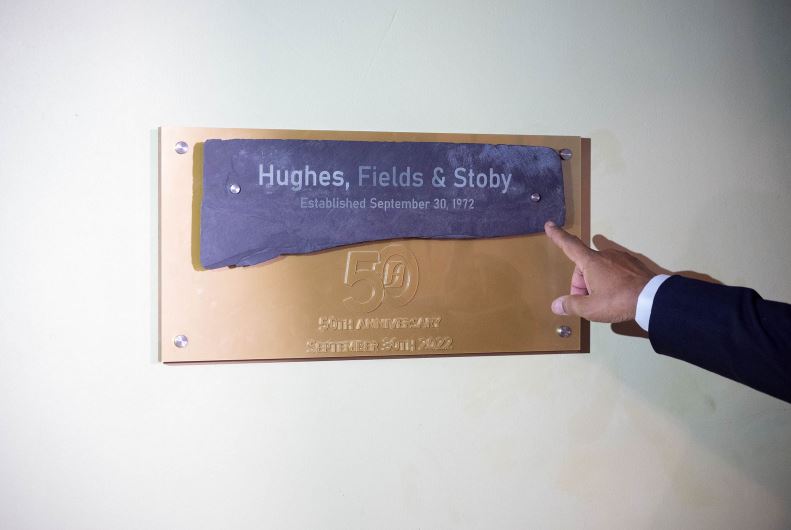

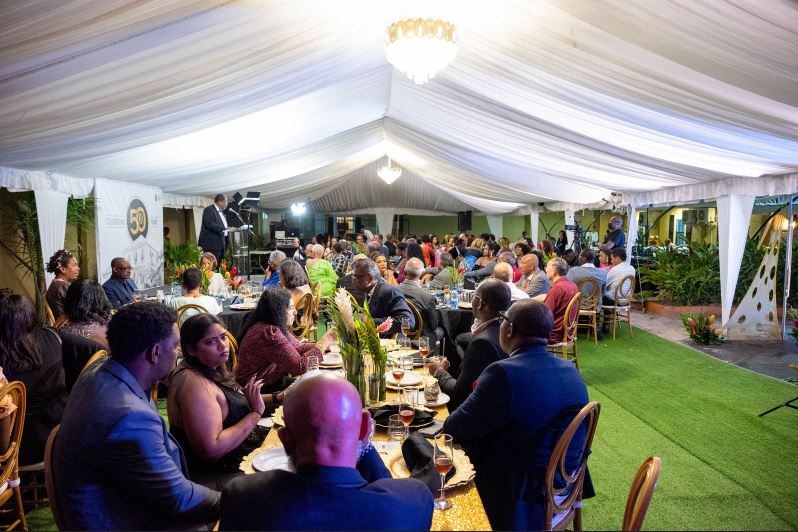
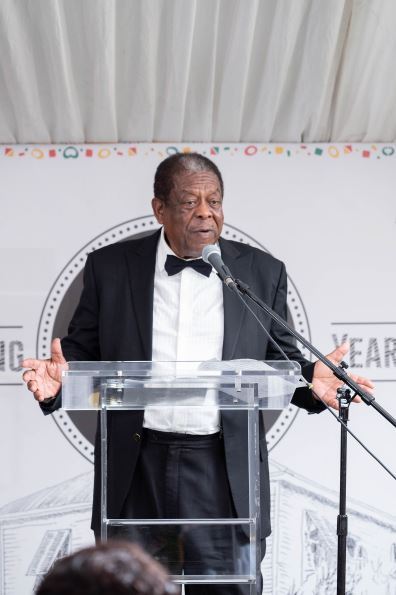

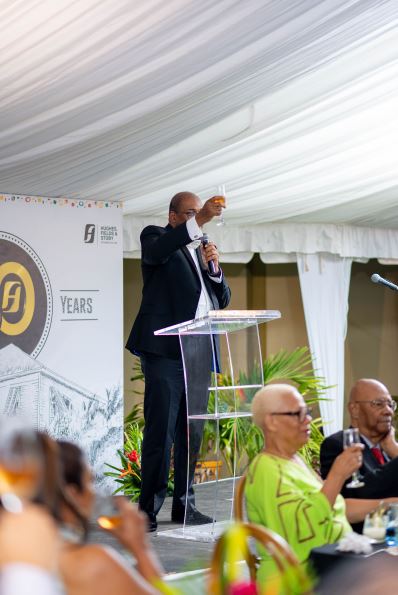


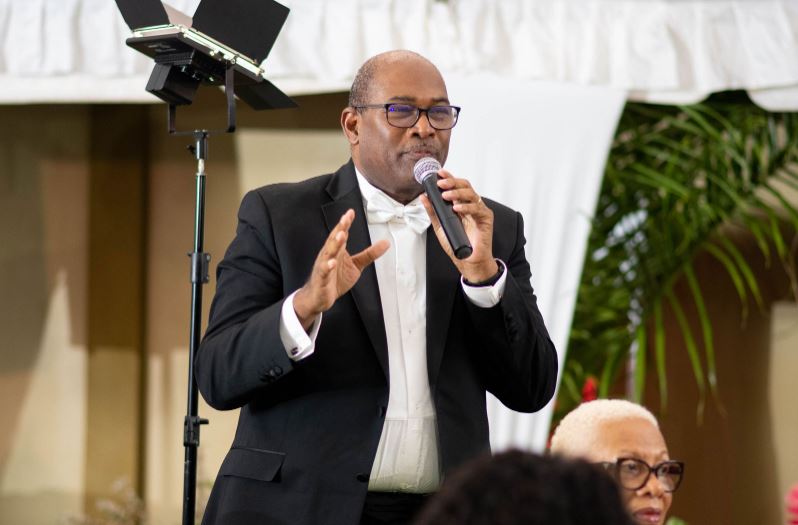

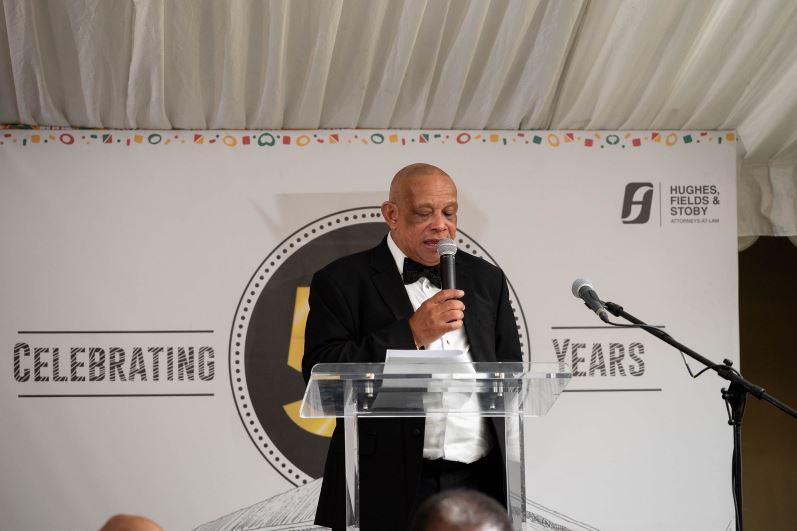







 by hsf-admin
Historic Ruling on Indigenous People’s Land Rights.
Van Mendelson Vs. Attorney General Guyana
On Friday the 16th December 2022 the Chief Justice Madame Justice Roxanne George handed down an historic judgment in the land rights claims brought by the Akewaio and Arekuna peoples of the Upper Mazaruni District, Region 7.
The plaintiffs, led by Van Mendelson, brought a class action suit in their capacities as the captains of Phillipai, Jawalla, Kako, Paruima, Waramadong and Kamarang for various declarations including a declaration that the Akeaio and Arekuna peoples have since time immemorial continuously occupied and used to the exclusion of others certain tracts of land described in the schedule.
The Chief Justice ruled that plaintiffs have since time immemorial continuously occupied their traditional lands and hold Aboriginal community title to the lands which pre dated colonial claims.
The land mark decision represents the culmination of decades long efforts by the indigenous peoples of the Upper Mazaruni region to seek recognition of their collective rights over lands.
The case which commenced in 1998, saw several elders from the various communities testifying in their native language along with various anthropological experts.
The ruling was the first decision of its kind in Guyana’s history and has significant implications for the indigenous communities in Guyana.
The plaintiffs have however appealed some aspects of the ruling.
Hughes Fields & Stoby have represented the Akewaio and Arekuna in this action continuously for the past twenty years.
 by hsf-admin
Press Release on the Filing of Habeas Corpus Proceedings on Behalf of Kristoff De Nobrega
There have been several news reports that Hughes Fields and Stoby has been associated with and linked to the filing of habeas corpus application for and on behalf of Kristoff De Nobrega by Ms. Kezia Williams.
Mr. De Nobrega has been arrested for the shooting of Quindon Bacchus.
Ms. Kezia Williams ceased being an associate of or associated with the firm of Hughes Fields & Stoby over two years ago.
Ms. Williams has practiced as a sole practitioner ever since.
The firm of Hughes Fields and Stoby is in no way associated with nor does it represent Mr. Kristoff De Nobrega.
Dated the 29th June 2022
C.A. Nigel Hughes
Managing Partner
Hughes, Fields & Stoby
62 Hadfield and Cross Streets
Georgetown
Demerara
 by hsf-admin
Caribbean Court of Justice (CCJ) reiterates the approach to sentencing in sexual offences
Caribbean Court of Justice (CCJ) reiterates the approach to sentencing in sexual offences.
The CCJ in delivering their decision in the appeal of Calvin Ramcharran V The State reiterated the approach which must be adopted by courts in sentencing in sexual offences cases.
The Court reiterated the approach which it established in Linton Pompey v the State.
The requirement for a separate sentencing hearing including but not limited to a victim impact assessment and social impact report are required to be part of the process.
Link to the decision. https://ccj.org/wp-content/uploads/2022/02/2022-CCJ-4-AJ-1.pdf